With the current speed of technological advancement, how can we possibly predict the future and what careers might look like?
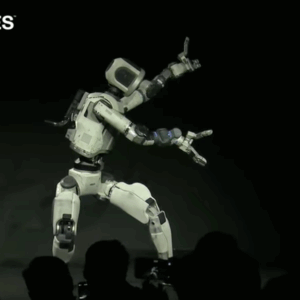
As I write this – Hyundai, in partnership with Boston Dynamics, are to kit out their assembly lines with humanoids. So the autonomous assembly line, as per Minority Report, is on the five year horizon rather than science fiction. At the same time, NASA with their Artemis mission in preparations for the moon as a stepping stone towards Mars. From Henry Ford’s assembly line to robot car makers. From Wright Brother’s scrappy first flight to interplanetary travel.
My youngest son, aged 4, is about to embark on his school career in September. Hitting the workforce in the 2040s, what on earth will the world of work look like by then? How do we plan and prepare our careers in the midst of such fast innovation?
In Microsoft’s “Worklab” podcast, Tyler Cowen’s advice is that AI won’t simply “take jobs”, it will make competition sharper, because in most roles you’re really competing with other people who use AI better than you do, so practical AI fluency becomes table-stakes.
In that world, polished application materials quickly lose signalling power: if “everyone now has a perfectly written cover letter,” then the differentiators shift to harder-to-fake proof and presence a stronger personal network and credible references (“who can vouch for you”), plus persuasion and interpersonal impact in real interactions (charisma/physical presence), and even pragmatic advantages like willingness to travel.
The standout skill, he argues, is orchestrating AI rather than merely using it: knowing when to defer to the model and when not to, and being able to manage/prompt it by framing problems and structuring work so the system can execute, capabilities employers will increasingly need to test for. So, we don’t try to predict the next decade; we build a “human edge” stack, judgment, relationships, and responsibility, that compounds across any industry and can’t be copy-pasted.
The human edge
So, what does that human edge stack look like?
- Judgment (problem framing, trade-offs, knowing when not to use AI)
- Proof (work samples, outcomes, portfolio, case studies)
- Relationships (who knows your work, who can vouch for you)
- Presence (clarity, persuasion, interpersonal impact)
- Responsibility (ownership, reliability, trust signals)
So, the message is stop trying to predict the job. And start building the person who thrives in any job. Part of that preparation is self-knowledge, knowing how you operate, where you thrive, and what kind of work consistently lights you up.